KH.19.O.512
Dublin Core
Title
KH.19.O.512
Description
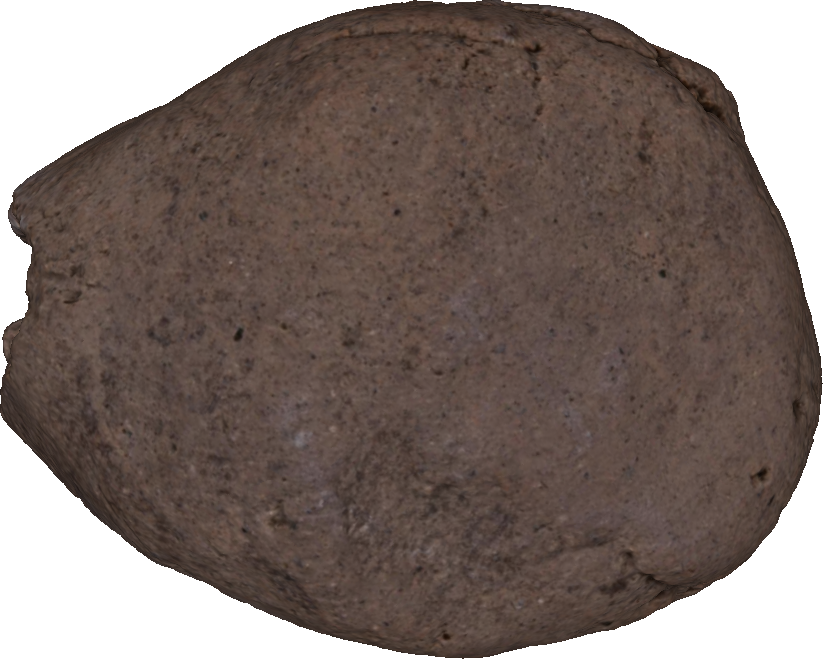
Complete hanging sealing, drop-shaped with a circular hole on the top left by the encasement of a double rope and with flattened sides. It bears five impressions of a stamp seal, one for each of the four sides and one on the base, alongside fingerprints. The seal impressions show possible geometric motifs on both sides of a dividing line, although they are too faint for a more accurate interpretation. Despite the lack of traces of the original carrier, it is possible to suggest that the hanging sealing was knotted to a written document, perhaps a wooden board, based on typological comparisons from the region (Waal 2023: 138-142; 2026: 747-748). This follows the Anatolian tradition of the Late Bronze age of sealing wooden writing boards and cuneiform tablets with strings and lumps of clay, testified by the large deposits of sealings from Nişantepe (Herbordt 2005; 2011) and Kayalıpınar (Maner et al. 2024: 442-443; see also Cat. no. 10). This practice appears in substitution of the Mesopotamian tradition of impressing the seals directly on the clay of the cuneiform documents (Waal 2026: 752-753). The presence of this type of sealing in the Iron I levels provides further evidence for the continuity of administrative practices at Karkemish after the fall of the Hittite empire (one may perhaps also compare a signet ring impression on a sealing from a layer, Cat. no. 11).
3D Model Item Type Metadata
3D Model
Site
Karkemish
Area
C East
Locus
F.10236
Context Type
Lower Palace
Context Date
Early Iron I
Sealing Measures
l. 2.5; w. 2.0; th. 1.4 cm
Files
Collection
Citation
“KH.19.O.512,” OrientLab Digital Collections, accessed October 24, 2026, https://www.orientlab.net/digital_museum/items/show/1147.