KH.19.O.113
Dublin Core
Title
KH.19.O.113
Description
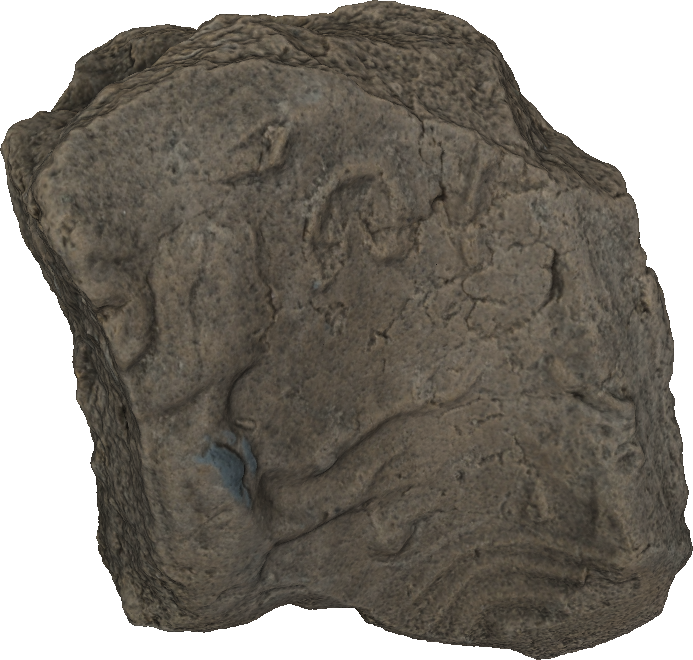
Fragmentary sealing applied to a container, either a wooden box or a flat lid. The reverse of the sealing is flat and shows the negative trace of wooden slats, while along the broken section there are negative marks of the rope and knot fastening the container, against which the lump of clay was placed. An impression of a cylinder seal is only partially preserved: it shows a standing male figure facing to the right with stretched arms and finely rendered fingers (cf. the posture of the personage in Cat. 27-30) and a thick strand of hair on the nape, which is very similar to Cat. no. 25. Of the name of the seal’s owner, written hieroglyphically, only the last syllable is readable: á (L19)-[...]-sa (L415), with -sa being the genitive case for the Iron Age Seal Inscription formula “This seal is of PN” (compare Cat. nos. 25 and 27-30). The importance of the Iron I corpus of sealings from Karkemish is made clear by the very limited amount of comparable material from other sites (Mazzoni 2013: 571-573): after the collapse of the trade networks and administrative structures of the Late Bronze age, their reorganization which followed in Iron I is still poorly known (Genz [2009: 312-313; 2011: 355] stresses that no evidence for administrative activities is to be found in Anatolia during the early Iron age) and the new evidence from Karkemish shows that - notwithstanding the urban and political continuity at Karkemish itself - new formulae, both visual and epigraphical, were devised.
3D Model Item Type Metadata
3D Model
Site
Karkemish
Area
C East
Locus
F.9640
Context Type
Lower Palace
Context Date
Early Iron I
Sealing Measures
l. 2.7; w. 2.2; th. 1.3 cm
Files
Collection
Citation
“KH.19.O.113,” OrientLab Digital Collections, accessed October 24, 2026, https://www.orientlab.net/digital_museum/items/show/1146.